
PE, HDPE, LDPE, PET and rPET: which bottle material suits your product?
In short: PE is the soft, squeezable plastic – the right choice when you need to dispense drop by drop. PET is the crystal-clear, rigid plastic – the right choice when the contents should stay visible and the bottle should keep its shape.
PE comes in two types: HDPE is firmer and exceptionally resistant to chemicals, LDPE is softer and gives you fine control when dispensing. rPET is PET made from recycled material and behaves like virgin PET.

Which material suits your product?
Select what you are filling – you will get a material recommendation and a direct route into our range.
What are you filling?
Precise dispensing meets flavour retention
Both work well for liquids and flavour concentrates. LDPE bottles let you dispense drop by drop with great control, while PET bottles retain aromas particularly well and show the fill level at a glance.
Visible contents, premium look
Liquid care products look their best in PET and rPET because the contents stay visible. Creamy textures are easier to take from jars, and sensitive formulations benefit from airless systems.
Keep aromas where they belong
PET offers the best barrier against aroma loss and keeps the bottle rigid. If you would rather dispense drop by drop, an LDPE bottle with a dropper insert is the more practical option.
The all-rounder for demanding formulations
HDPE is the most chemically resistant material shown here and copes well with alkaline formulations. The bottles stay rigid and seal reliably.
Filling alcohol-based formulations safely
Alcohol-based formulations are equally well served by HDPE and PET. For use on the go, small formats with a spray head are especially popular.
Handling small volumes cleanly
For samples, visibility and a secure seal matter most. PET shows the contents, while HDPE excels with chemically demanding samples. Mini formats from 2 ml store well and reduce waste.
PE explained: HDPE and LDPE
PE stands for polyethylene – the most widely used plastic for bottles worldwide. It is lightweight, shatterproof and highly resistant to chemicals. What matters in practice is which of the two types you are holding.
HDPE
High density PE · recycling code 2
HDPE is the firm, highly chemical-resistant type of PE. It looks milky and opaque, feels solid and holds its shape. That makes it the first choice for cleaners, technical fluids and alcohol-based formulations.
In your hand: squeeze it and the bottle barely gives, snapping back immediately.
LDPE
Low density PE · recycling code 4
LDPE is the soft, easily squeezable type of PE. It compresses readily and releases the contents in a controlled way – the basis of every good dropper and needle bottle.
In your hand: the bottle noticeably compresses and slowly returns to shape.
PET
Polyethylene terephthalate · recycling code 1
PET is crystal-clear, rigid and aroma-tight. The fill level stays visible at all times and the bottle keeps its contour. This makes PET the preferred choice for liquids, essential oils and anything that should look good on a shelf.
In your hand: smooth and firm – as a dropper bottle it squeezes well and springs back briskly.
rPET
Recycled PET · recycling code 1
rPET offers the properties of PET and is made from recycled material. A slight tint can occur, which many brands find underlines the premium feel. For brands with a sustainability commitment, rPET is the natural choice.
In your hand: just like PET – clear, firm and easy to dispense from.
The four materials side by side
This overview covers what actually makes the difference in practice.
| Property | HDPE | LDPE | PET | rPET |
|---|---|---|---|---|
| Recycling code | 2 | 4 | 1 | 1 |
| Density | 0.94–0.97 g/cm³ | 0.91–0.93 g/cm³ | 1.33–1.40 g/cm³ | 1.33–1.40 g/cm³ |
| Appearance | milky, opaque | soft, translucent | crystal-clear | clear, slight tint possible |
| Fill level readable | roughly | roughly | precisely at any time | precisely at any time |
| Feel | firm, gives way in a controlled way | particularly soft | firm, springs back briskly | firm, springs back briskly |
| Shape-stable in continuous use up to | approx. 100 °C | approx. 80 °C | approx. 60 °C | approx. 60 °C |
| Squeeze dispensing | good – as a dropper bottle | excellent – finest control | good – as a dropper bottle | good – as a dropper bottle |
| Acids and alcohols | excellent resistance | good resistance | good resistance | good resistance |
| Alkaline formulations | excellent resistance | excellent resistance | limited suitability | limited suitability |
| Essential oils and aromas | well suited | well suited | excellent – strong aroma barrier | excellent – strong aroma barrier |
| Oxygen barrier | moderate | low | high | high |
| Typical use | cleaners, chemicals, disinfection | dropper and needle bottles | liquids, cosmetics, samples | cosmetics with a sustainability focus |
Scroll table sideways
Why the temperature limit matters more than the melting point
PET only melts at around 250 °C – but it loses its shape far earlier. What counts in practice is therefore not the melting point but the temperature up to which the bottle keeps its contour. This becomes particularly relevant for hot filling and for cleaning.
Planning to hot-fill or steam-sterilise? Get in touch – we will tell you which bottle can handle it.
Further materials in the range: PP and PETG
Besides PE and PET we carry two more plastics. They are not part of the table above because they serve different purposes. Exact figures on temperature and suitability are shown on each product page.
PP
Polypropylene · recycling code 5
You mainly meet PP where mechanics are involved: in the airless dispensers and in some of the cream jars. It is more rigid than PE and stays matt rather than crystal clear.
In the hand: Firm and dimensionally stable, with a slightly silky feel.
PETG
Glycol-modified PET
PETG is a variant of PET: just as clear, but easier to form and less brittle. You will find it across the bottle shapes – from disc-top through spray bottles to dosing bottles.
In the hand: Like PET, only a little more yielding.
Which bottle suits your application?
Material is only half the decision – the shape matters just as much. It determines how your product is dispensed: drop by drop, with pinpoint accuracy, as a fine mist or with a brush. Every range is supplied empty for you to fill.

Liquid and dropper bottles
The widest range in our shop: from 2 ml to 1000 ml, in PE and PET, with a dropper insert for precise dispensing.

Needle bottles
The metal tip fills narrow openings precisely – no funnel needed. In soft PE or clear PET, from 5 to 100 ml.
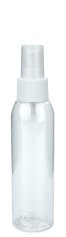
Spray bottles
A fine mist for cleaners, care products and disinfectants – with an atomiser head or as a trigger sprayer for larger volumes.
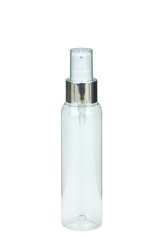
Lotion pump bottles
The lotion pump dispenses creamy and liquid care products in measured amounts – one hand is enough.

Disc-top / flip-top bottles
The hinged cap opens and closes with your thumb – no need to put the lid down.
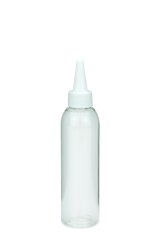
Bottles with a dosing nozzle
The narrow tip releases small amounts under control – for oils, paints and laboratory liquids.

Bottles for disinfectants
Suitable empty bottles for filling hand sanitiser – the 50 ml oval bottle with a flip-top closure opens with one hand.

Pen bottles
A particularly slim shape with a removable dispensing tip – also known as a unicorn bottle, ideal for carrying around.

Godzilla bottles
Sturdy pen bottles with the distinctive Godzilla shape, available in PE and PET.

Brush bottles
For applying soldering fluid, oils and paints precisely. With a single brush, as an applicator or as a double brush.

Mini and sample bottles
Sample containers from 2 ml for oils, creams and liquids – small enough to send by post.

Oval and round bottles
Flat HDPE formats from 50 to 200 ml with a removable dispensing tip, optionally with a flip-top closure.

Base bottles
The brown 1000 ml PET bottle with a tamper-evident closure – for liquid bases and larger quantities.
Not only bottles
Depending on what you are filling, a different container type may be the better choice:
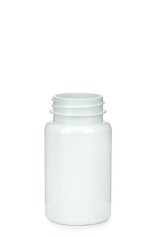 Jars & containersCreamy and pasty products are easy to take out by hand or with a spatula – from mini jars to wide-neck containers.
 Airless dispensersThe formulation never meets air – ideal for sensitive cosmetics and near-complete emptying.
On materials: depending on the series, jars and airless systems are made from PET, HDPE, PP, SAN or acrylic – they are therefore not part of the PE/PET comparison above. You will find the specific material in each product listing. Individual caps and closures and dropper inserts are available separately too.
Which size do you need?
Our range runs from 2 ml to 2000 ml. The quickest way is the search below: pick what you need and you will see straight away how many products match.
Find the right container
A few details are enough – we will show you everything that matches, across the whole range.
Or start directly from a size band:
 up to 20 ml157 products
 21 to 50 ml309 products
 51 to 100 ml453 products
 101 to 150 ml356 products
 151 to 200 ml351 products
 201 to 250 ml420 products
 251 to 500 ml205 products
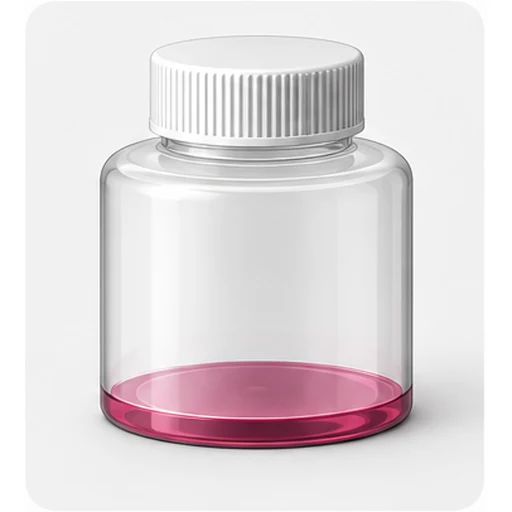 over 500 ml184 products
From about 250 ml upwards it is also worth looking at the jars and tins: wide-neck formats are easier to fill and empty than a narrow bottle in many applications.
Neck finishes
The first number is the neck diameter in millimetres, the second is the thread form. A closure only fits when both numbers match. For round threads (RD, also called DIN) the number likewise gives the diameter.
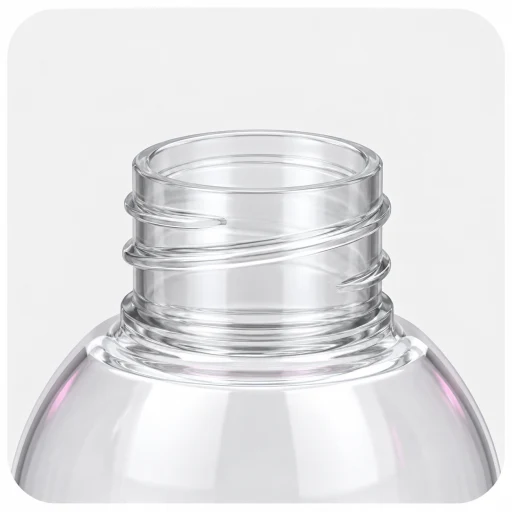 24/4101197 products
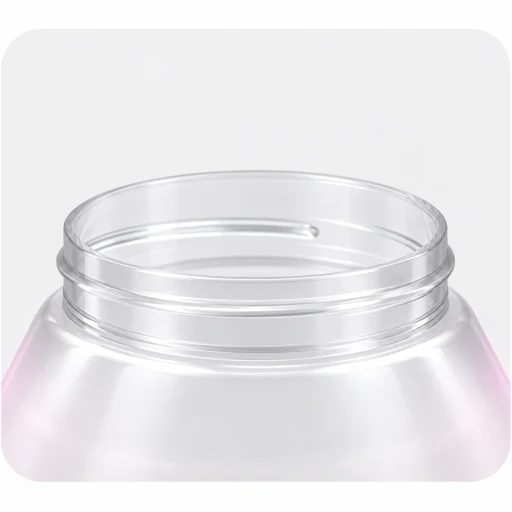 70/400210 products
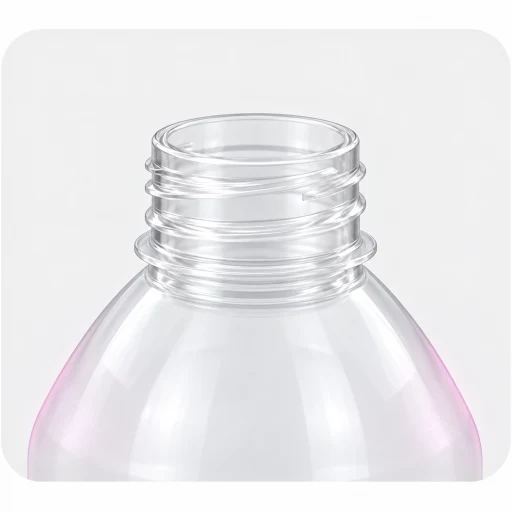 38 mm121 products
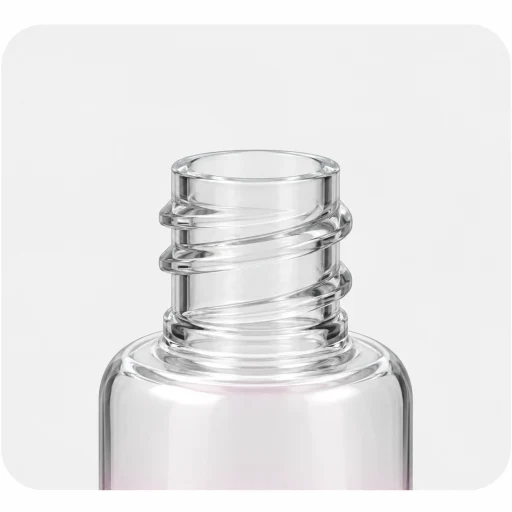 18/41599 products
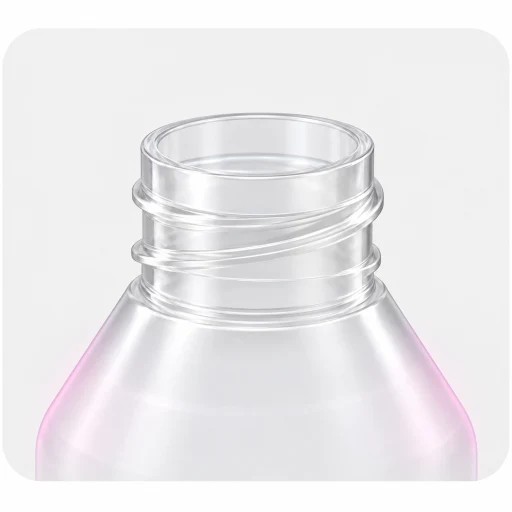 28/41087 products
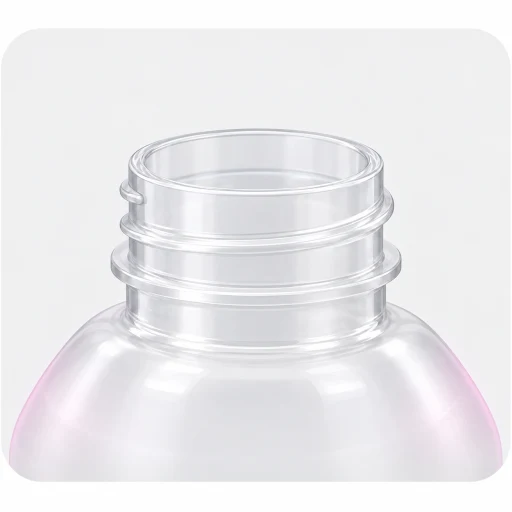 38/40040 products
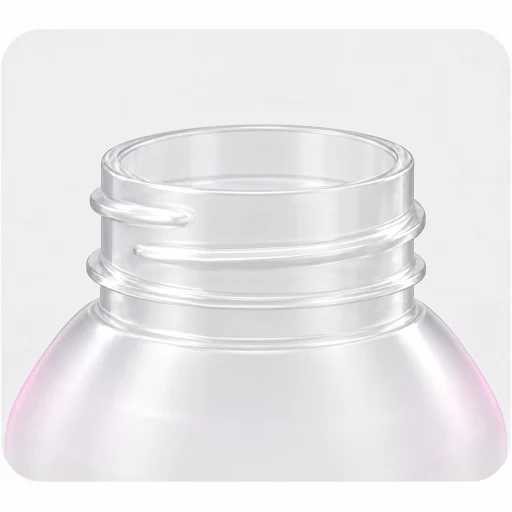 45/40040 products
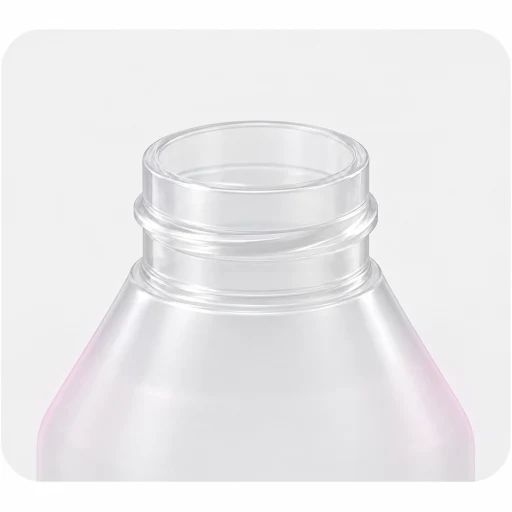 24/4002 products
The neck finish is stated on every product page. Where it is missing, we will gladly tell you on request.
Which closure suits your product?
The closure decides how your product is dispensed. These types are available:
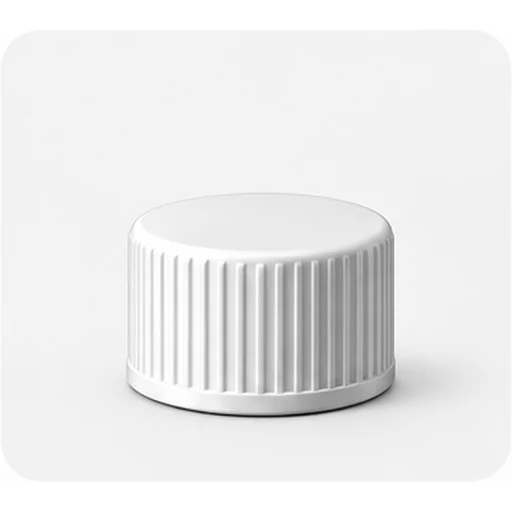 Screw cap811 productsThe classic: quick to open, secure to close.
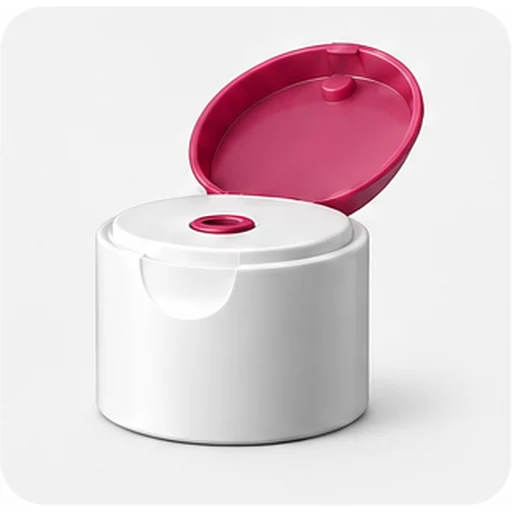 Disc top / flip top300 productsA thumb press opens the outlet; the lid stays on the bottle.
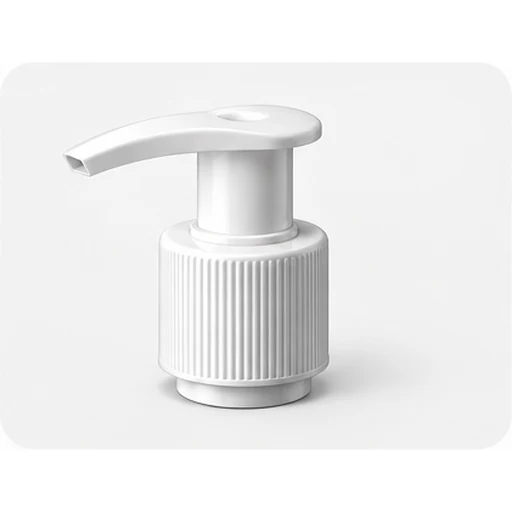 Pump257 productsA lotion pump for creamy and liquid products, operated with one hand.
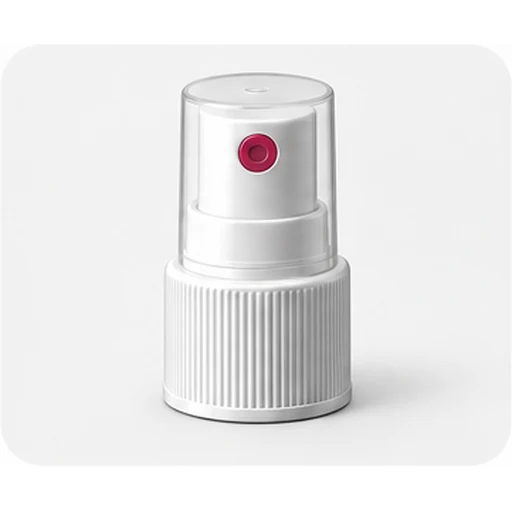 Spray head243 productsA fine mist for care products, cleaners and disinfectants.
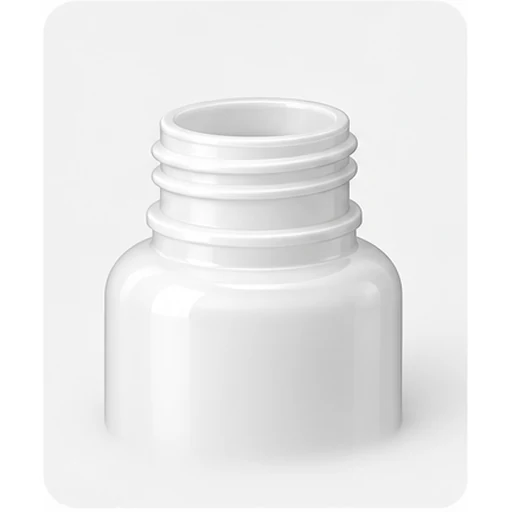 without closure157 productsFor your own closures or for machine filling.
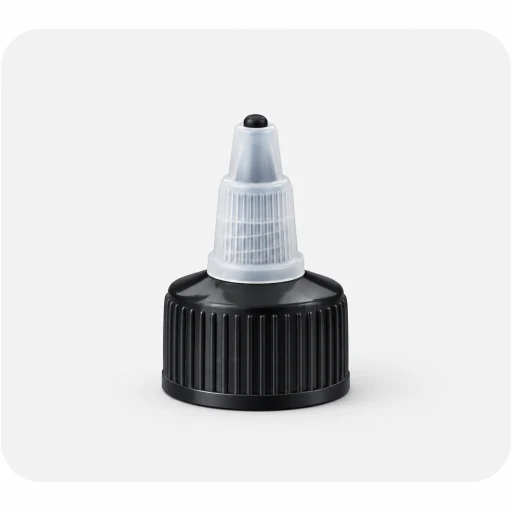 Dropper tip154 productsA narrow tip for small, controlled amounts.
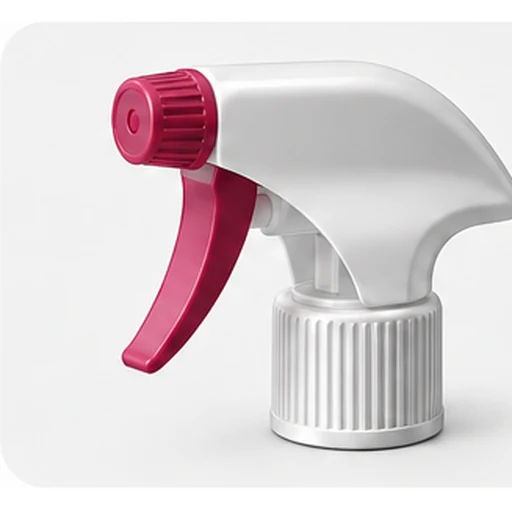 Trigger sprayer139 productsFor larger volumes: the trigger delivers more liquid per stroke.
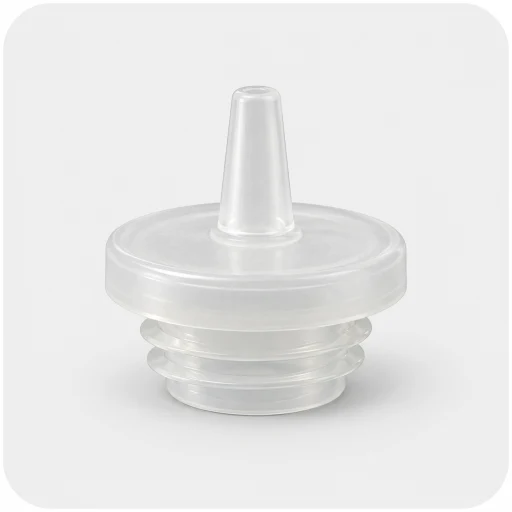 Dropper insert110 productsThe pressed-in insert releases the contents drop by drop.
 Airless pump head104 productsThe formulation never meets air and can be dispensed almost completely.
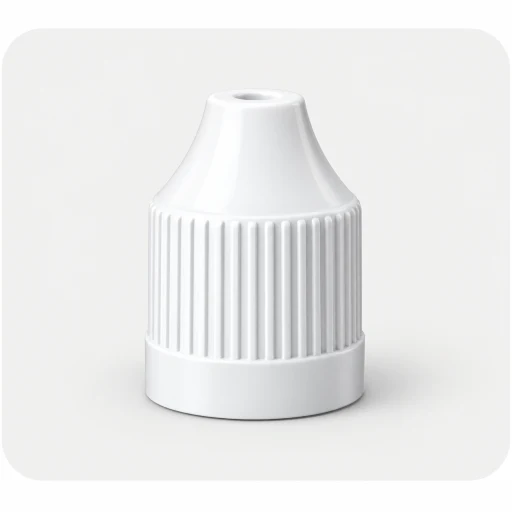 Child-resistant cap38 productsPress and turn at the same time to open. Required under ISO 8317 for certain formulations.
 Needle tip23 productsThe metal tip fills narrow openings precisely.
 Tamper-evident cap22 productsA tamper ring stays visibly behind when the bottle is first opened.
 Roll-on ball18 productsThe ball in the head applies the contents as it rolls.
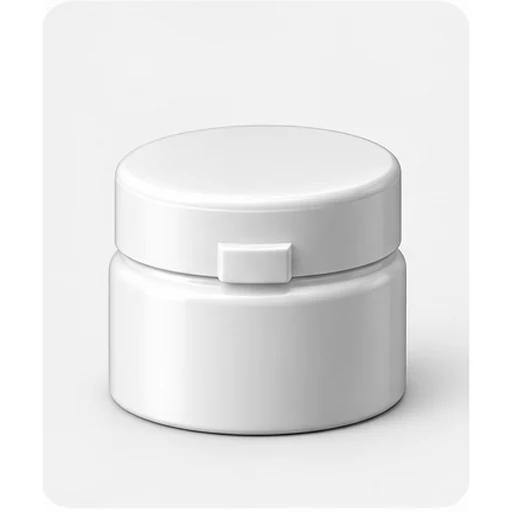 Snap-on lid8 productsThe lid is pressed on rather than screwed on.
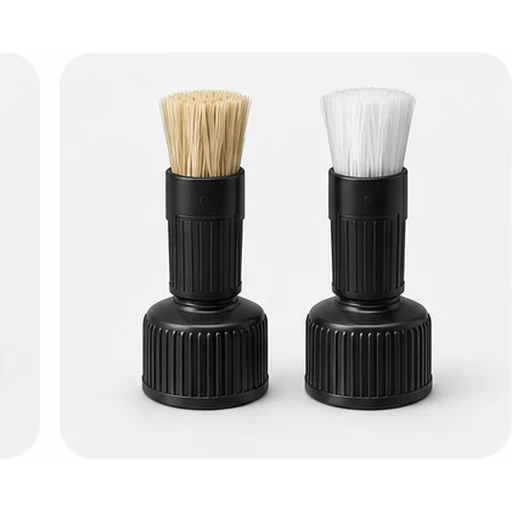 Brush cap7 productsFor applying flux, oils and paints exactly where needed.
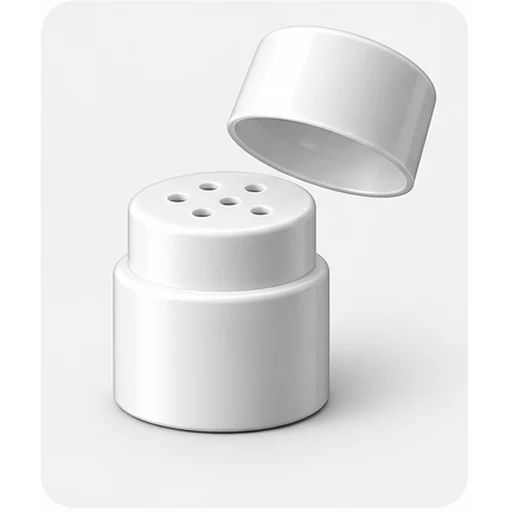 Shaker / push-on lid4 productsFor sprinkling, with a protective cap over the top.
Child-resistant and tamper-evident closures
Regardless of the type, a closure can carry additional safety features. Which one you need depends on your filling and its classification – please get in touch.
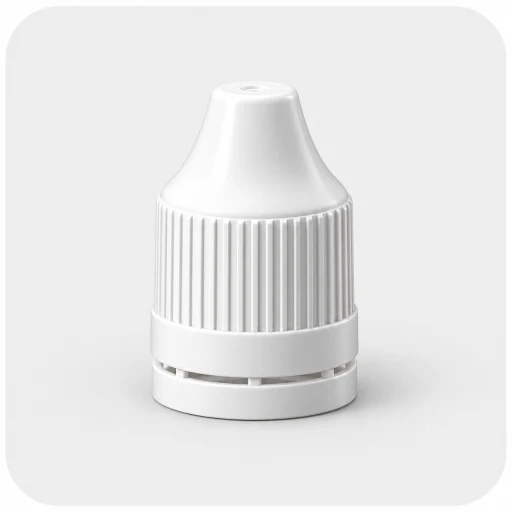 Tamper-evident + child-resistant70 productsChild-resistant cap and tamper ring in one closure.
- Child-resistant54 productsPress and turn at the same time to open, to ISO 8317.
 Tamper-evident330 productsThe tamper ring shows your customers that the pack is untouched.
- Standard cap1994 productsThe everyday closure for regular use.
Individual caps, closures and dropper inserts are available separately as well.
Who uses which material
| E-liquid and flavours | PET for aroma retention and visibility, LDPE for precise dispensing |
|---|---|
| Cosmetics and care | PET and rPET for a clear look, airless for sensitive formulations |
| Pharmacy and lab | HDPE for chemically demanding contents, PET for visible samples |
| Cleaning and technical | HDPE for alkaline and solvent-based formulations |
| Disinfection | HDPE and PET for alcohol-based preparations |
| Food and flavours | PE and PET, each with the matching declaration of conformity |
Choosing a material: guidance and your own testing
The figures on this page are guide values for pre-selection. How a material behaves in daily use also depends on concentration, temperature, storage time and the additives in your formulation.
Food contact and cosmetic products are subject to their own legal requirements. What counts is always the product-specific declaration of conformity for the individual article – just ask us for it. For new or aggressive formulations we also recommend running your own storage test with the actual contents. We are happy to send you samples for that.
Recycling codes at a glance
The triangle with a number on the bottom of the bottle identifies the material – useful for disposal and for recognising what you have.
Frequently asked questions about PE and PET
What is the difference between PE and PET?
What does HDPE mean and what is it suitable for?
Can PET bottles be squeezed?
What is the difference between HDPE and LDPE?
What is rPET and how does it differ from PET?
How heat resistant are PE and PET?
Which material is suitable for food and cosmetics?
What does the abbreviation PET stand for?
Sources and information status
The figures on this page are based on generally accepted material data for packaging plastics and on the technical specifications of our suppliers. Temperature and resistance values given here are guide values for pre-selection.
- ISO 8317 – reclosable child-resistant packaging
- Recycling codes 1 to 7 under the international plastics identification scheme
- Technical data sheets from our manufacturers
Last reviewed: July 2026 · Editorial team: Flaschen-Handel.eu
Found the right bottle?
Once the material is settled, usually only the label is missing. Our label calculator works out the right label size for your bottle in seconds.


Flaschen-Handel.eu © 2026 | Template © 2009-2026 by modified eCommerce Shopsoftware